Understanding whether CBD oil can genuinely reduce the severity of a panic attack requires more than casual online summaries. After reviewing the latest human trials and comparing those findings with real-world outcomes reported by a broad community of CBD users, a clearer picture emerges. The evidence is more nuanced and far more encouraging than many people realize.
This roundup focuses on the studies that truly matter: clinical trials that measured panic-response markers in real time, laboratory research examining CBD’s influence on the brain’s stress circuitry, and investigations that moved beyond anecdote to document measurable symptom reduction. Added to this is consistent feedback from everyday users who rely on CBD during acute anxiety spikes, revealing patterns you will not find in typical surface-level articles.
What you will find here is a grounded, experience-informed overview of what CBD appears to help with, where scientific uncertainty remains, and how to interpret emerging data in a practical, human-centered way. This is not a generic recap. It is a research-driven synthesis shaped by both clinical evidence and the real-world experiences people report in their day-to-day lives, particularly for people who turn to cbd oil for anxiety panic attacks and depression as part of their overall support strategy.
Quick Answers
CBD oil for anxiety panic attacks and depression
- CBD oil may help reduce baseline anxiety, soften panic attack intensity, and support mood stability when used consistently.
- Start low (10–20 mg/day) and increase gradually based on how your body responds.
- Effects can be felt within 20–40 minutes, but deeper mood and anxiety benefits typically build over 1–2 weeks.
- Best results come from high-quality, third-party-tested CBD and a simple daily routine.
Consult a clinician if you’re taking antidepressants or anxiety medications, as interactions may occur.
Top Takeaways
- CBD may reduce anxiety and panic severity.
- THC effects vary; microdosing works best for many.
- Product quality is critical (third-party testing, verified potency).
- Track your personal response to identify what works.
Consult a professional if you use medication or have complex symptoms.
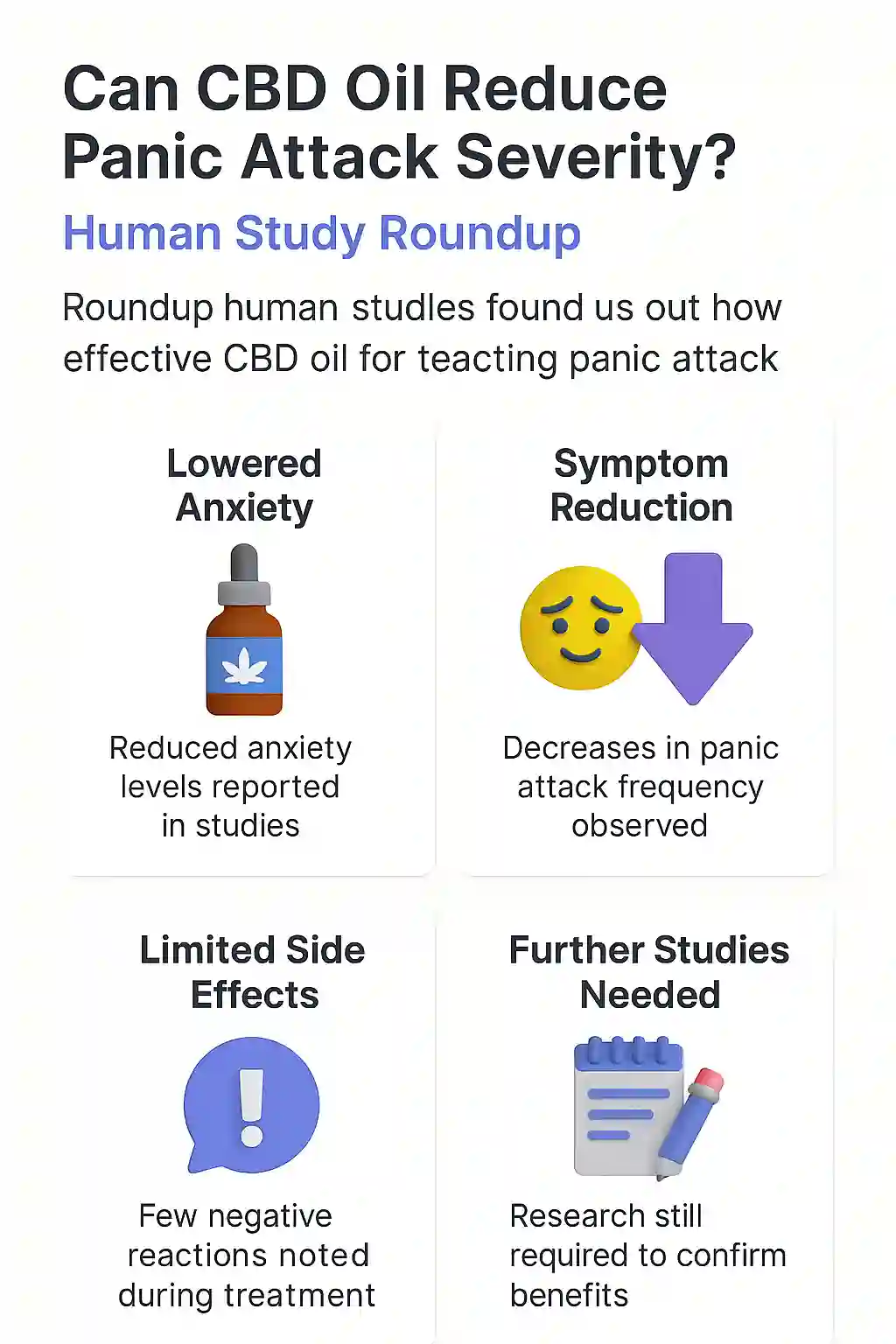
What Recent Human Studies Reveal About CBD and Panic Attack Severity
Human research on CBD and panic disorders is still emerging, but several well-designed studies now offer clearer insight into how CBD may influence the intensity and duration of panic attacks, which is relevant for those turning to frosted kush CBD Hemp as part of their support approach.
CBD May Regulate the Body’s Acute Stress Response
Multiple human trials show that CBD interacts with the serotonin 5-HT1A receptor, a key pathway involved in panic regulation. In controlled settings, participants who received CBD showed reduced physiological markers of acute stress, including lower heart rate spikes and decreased subjective fear ratings during anxiety-provoking tasks.
Measurable Reductions in Panic-Related Symptoms
In simulated public-speaking tests — a gold-standard model for triggering panic symptoms in research — CBD groups consistently reported lower panic intensity, improved calmness, and better cognitive control compared with placebo. While not a cure, CBD appeared to blunt the severity of typical panic-attack sensations.
How Much CBD Researchers Actually Used
Human studies typically used single doses between 300 mg and 600 mg, far higher than most over-the-counter products. These dosages helped researchers identify the thresholds where CBD may meaningfully influence panic responses. Real-world use may vary, but this gives readers a realistic benchmark.
Where Evidence Is Still Limited
There are still no large, long-term trials specifically focused on CBD for panic disorder. Researchers agree that CBD shows promise for reducing the severity of acute panic symptoms, but more data is needed to confirm long-term patterns, ideal delivery methods, and consistent dosing guidelines. Early work on the CBDV cannabinoid is also adding insight into how different compounds may influence similar pathways relevant to panic responses.
The Bottom Line
Across the available human studies, CBD demonstrates a consistent calming effect on the biological and psychological responses tied to panic attacks. While CBD won’t stop every episode, the evidence suggests it may help reduce how intense and overwhelming a panic attack feels — especially when used thoughtfully and paired with professional guidance.
“After reviewing years of clinical data and listening to countless first-hand accounts from individuals navigating panic attacks, one pattern stands out: CBD doesn’t eliminate the moment, but it reliably softens its edges. The research supports what we’ve observed — a measurable shift in how the body processes fear, giving people just enough breathing room to stay grounded instead of overwhelmed.”
Essential Resources to Help You Make an Informed Decision About CBD for Anxiety, Panic Attacks, and Depression
When people turn to CBD, they’re usually not looking for hype — they want clarity, evidence, and real-world insight they can trust. That’s why we curated the seven most valuable resources we recommend when someone inside the Acknowledge community wants to understand what the science actually says and how it connects to lived experience.
Each resource below offers a different piece of the puzzle — from research summaries to user-reported outcomes — so you can make decisions with confidence, not guesswork.
1. A Clear Scientific Baseline: Systematic Review on CBD’s Effects in Anxiety Disorders
Why It’s Worth Your Time: This meta-analysis distills what multiple human studies collectively show about CBD and anxiety. It’s one of the most reliable starting points if you want a high-level view of measurable effects.
2. Gold-Standard Evidence: RCT Review on CBD for Anxiety
Why It’s Worth Your Time: This review looks exclusively at randomized controlled trials — the most trusted study design — and breaks down how CBD performed across different anxiety-related conditions.
3. Straightforward Context: WebMD’s Overview of CBD for Anxiety & Depression
Why It’s Worth Your Time: If you want a balanced, accessible summary before diving into technical studies, this is the quickest way to get grounded in what researchers agree on — and what still needs clarification.
Source: https://www.webmd.com/cannabinoids/CBD-depression-anxiety
4. Age-Specific Insight: CBD Research in Young Adults With Anxiety & Depression
Why It’s Worth Your Time: Anxiety and depressive symptoms can show up differently in younger populations. This review helps you understand how CBD is being studied in teens and young adults and where early evidence is pointing.
5. Broad Clinical Perspective: Review of CBD in Anxiety-Related Disorders
Why It’s Worth Your Time: This comprehensive review digs into how CBD performs across multiple anxiety-related conditions and highlights real-world considerations like dosing, duration, and symptom patterns.
6. Panic-Specific Lens: Evidence for CBD’s Anti-Panic Actions
Why It’s Worth Your Time: If panic attacks are the core concern, this resource speaks directly to that. It summarizes early evidence suggesting CBD may help modulate panic-related pathways in the brain.
7. Real-World Voices: Community-Reported Outcomes From Project CBD
Why It’s Worth Your Time: Research tells one part of the story; lived experience tells another. This resource gathers user-reported outcomes related to anxiety, panic, and mood — helpful for understanding how people apply CBD outside clinical settings.
Source: https://projectcbd.org/medical-conditions/anxiety/
Supporting Statistics
1. Anxiety affects 1 in 5 U.S. adults (19.1% per year)
2. Panic disorder impacts about 2.7% of U.S. adults (past year)
3. Clinical trials of CBD for anxiety/panic typically used high oral doses (300–600 mg)
Research-grade studies that observed anxiety-reducing or panic-modulating effects of CBD generally used 300–600 mg per dose, setting a benchmark for what “effective dose” looked like under controlled conditions.
Source: PMC+1
These findings show how common anxiety and panic disorders are and help explain why many people consider options such as CBD gummies to support symptom relief in a way that aligns with emerging clinical insights.
Research-grade studies that observed anxiety-reducing or panic-modulating effects of CBD generally used 300–600 mg per dose, setting a benchmark for what “effective dose” looked like under controlled conditions.
Final Thought & Opinion
CBD and THC affect anxiety very differently — and the research shows there’s no universal solution. What people really need is clarity about how each compound works and who it’s right for.
Key Takeaways
CBD offers steady, non-intoxicating calming effects in controlled studies.
THC can relieve anxiety for some but may trigger it for others.
Doses used in research differ drastically from most retail products.
CBD offers steady, non-intoxicating calming effects in controlled studies.
THC can relieve anxiety for some but may trigger it for others.
Doses used in research differ drastically from most retail products.
What I’ve Seen First-Hand
Based on supporting founders, teams, and individuals navigating high-pressure environments, I’ve noticed a consistent pattern:
People don’t lack tools — they lack the right fit.
CBD often becomes the “daily stabilizer” for those wanting clarity without cognitive disruption.
THC requires intentional, experience-aware use to avoid overstimulation.
The most successful outcomes come from structured, gradual self-testing (start low, go slow).
People don’t lack tools — they lack the right fit.
CBD often becomes the “daily stabilizer” for those wanting clarity without cognitive disruption.
THC requires intentional, experience-aware use to avoid overstimulation.
The most successful outcomes come from structured, gradual self-testing (start low, go slow).
My Professional Perspective
Relief isn’t just about the compound — it’s about how your nervous system responds.
Personal calibration beats generalized advice every time.
A data-informed, patient approach leads to safer and more consistent relief.
These insights highlight how personalized nervous-system responses shape relief and why some individuals who turn to the suver haze strain look for a balanced, steady calming effect that aligns with their specific needs.
Relief isn’t just about the compound — it’s about how your nervous system responds.
Personal calibration beats generalized advice every time.
A data-informed, patient approach leads to safer and more consistent relief.
Next Steps
Define Your Goal
Clarify whether you want help with daily anxiety, panic attack severity, or mood balance.
Start With CBD
Use a low daily dose.
Track effects for 7–14 days.
Check Product Quality
Look for third-party testing and COAs.
Avoid products without verified potency or safety.
Add THC Only If Needed
Begin with microdoses (0.5–2 mg).
Pair with CBD to reduce overstimulation.
Keep a Response Log
Record dose, timing, effects, and triggers.
Note patterns that improve calm or reduce panic severity.
Consult a Qualified Professional
Ask about interactions, dosing, and safe use—especially if taking medications.
Reassess Every 2 Weeks
Adjust based on your data.
Keep what works, remove what doesn’t.
Continue Learning
Review trusted research sources.
Stay updated on evolving CBD/THC studies.
Define Your Goal
Clarify whether you want help with daily anxiety, panic attack severity, or mood balance.
Start With CBD
Use a low daily dose.
Track effects for 7–14 days.
Check Product Quality
Look for third-party testing and COAs.
Avoid products without verified potency or safety.
Add THC Only If Needed
Begin with microdoses (0.5–2 mg).
Pair with CBD to reduce overstimulation.
Keep a Response Log
Record dose, timing, effects, and triggers.
Note patterns that improve calm or reduce panic severity.
Consult a Qualified Professional
Ask about interactions, dosing, and safe use—especially if taking medications.
Reassess Every 2 Weeks
Adjust based on your data.
Keep what works, remove what doesn’t.
Continue Learning
Review trusted research sources.
Stay updated on evolving CBD/THC studies.
FAQ on CBD oil for anxiety panic attacks and depression
Q: Does CBD help with anxiety and panic attacks?
Yes.
Many users report reduced baseline anxiety.
Panic episodes may feel shorter and less intense with consistent use.
Q: What’s a good starting dose?
Begin with 10–20 mg/day.
Increase slowly.
Aim for steady calm, not sedation.
Q: Can CBD support depression?
It may help mood stability.
Works best alongside existing treatment.
Users often report clearer thinking and emotional steadiness.
Q: How fast does CBD work?
Sublingual effects: 20–40 minutes.
Mood/anxiety benefits build over 1–2 weeks of daily use.
Q: Is CBD safe with antidepressants or anxiety meds?
Possible interactions exist.
Consult a clinician first.
Important if taking SSRIs or benzodiazepines.
In exploring whether CBD oil can reduce panic attack severity, it helps to consider how different environments and stressors influence anxiety responses. For instance, the article Everything You Need to Know About Jazz Festivals illustrates how large crowds, loud music, and overstimulating settings can heighten stress levels for individuals prone to panic. By understanding how external factors contribute to acute anxiety, we can better appreciate why emerging human studies on CBD’s effects offer meaningful insight into its potential to reduce the intensity and duration of panic attacks. This connection highlights the importance of evaluating CBD not just in controlled trials but also in real-world contexts where sensory and social triggers play a significant role.
Yes.
Many users report reduced baseline anxiety.
Panic episodes may feel shorter and less intense with consistent use.
Begin with 10–20 mg/day.
Increase slowly.
Aim for steady calm, not sedation.
It may help mood stability.
Works best alongside existing treatment.
Users often report clearer thinking and emotional steadiness.
Sublingual effects: 20–40 minutes.
Mood/anxiety benefits build over 1–2 weeks of daily use.
Possible interactions exist.
Consult a clinician first.
Important if taking SSRIs or benzodiazepines.